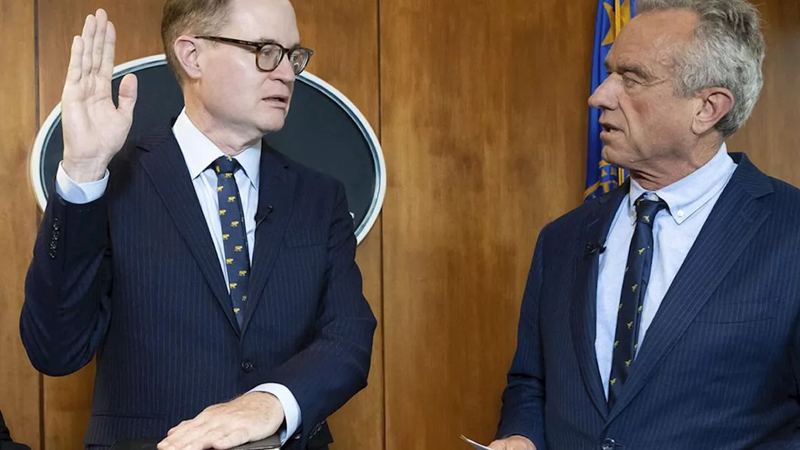
The Centers for Disease Control and Prevention sparked controversy by revising its childhood vaccine schedule, reducing the number of universally recommended vaccines and shifting several to “high-risk groups only.” The changes have drawn opposition from the American Academy of Pediatrics, state health departments, and school nurses who worry about increased disease transmission and declining vaccination adherence.
The CDC reduced universal recommendations from 17 to 11 vaccines. All children continue to receive vaccines for measles, mumps, rubella, polio, pertussis, tetanus, diphtheria, Haemophilus influenzae type B, HPV, chickenpox, and pneumococcal disease. However, hepatitis A, COVID-19, and RSV are now only recommended for “high-risk groups” following physician consultation. This follows the CDC’s earlier decision to no longer universally recommend hepatitis B vaccination for newborns.
Opposition and concerns
Acting CDC Director Jim O’Neill characterized the revised schedule as “a more focused schedule that protects children from the most serious infectious diseases while improving clarity, adherence, and public confidence.” However, the American Academy of Pediatrics and health departments in California, Oregon, and Washington announced they would not follow the new schedule.
Lynn Nelson, president of the National Association of School Nurses, warned that “school children don’t live in a microcosm…they live in a community.” She noted that measles outbreaks harm school attendance and force caregivers to miss work. Measles cases in the U.S. last year reached their highest level since elimination was declared in 2000. Dr. Daniele Gusland, a pediatric infectious-disease expert at UCSF, expressed concern that federal messaging contradicting state guidance will burden medical providers with additional patient inquiries and may lead to future vaccine shortages as clinics reduce stock of vaccines.
This article is an AI-assisted summary. All facts and figures are drawn from the original report: https://us.headtopics.com/news/controversy-erupts-over-cdc-s-revised-childhood-vaccine-78141885