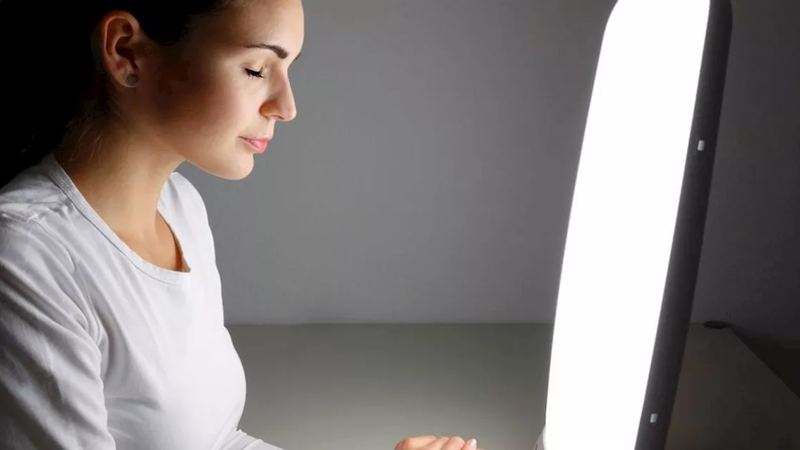
Light therapy is a relatively easy treatment option that may help reduce symptoms of seasonal affective disorder (SAD), a condition most common in winter that can cause feelings of hopelessness, tiredness, and melancholy. Light therapy treatment involves sitting in front of a custom bright light for about 30 minutes a day, with most devices providing 10,000 lux exposure, approximately the amount of outdoor light on an overcast day.
According to researchers, light therapy works by impacting the circadian system, which regulates sleep and wake cycles and influences many brain and body functions. Jamie Zeitzer, a professor at Stanford University’s Department of Psychiatry and Behavioral Sciences and co-director of the Center for Sleep and Circadian Sciences, explained that when internal clocks aren’t aligned with schedules, people might experience SAD symptoms, and artificial light therapy can help address this misalignment. “In some individuals there seems to be a direct impact of light on mood,” Zeitzer said, though the exact mechanism is not completely clear. He also noted that people are generally happier outdoors than indoors.
A study of 22 women found that light therapy in the morning was associated with a significant reduction in symptoms of perinatal depression. Light therapy is safe for most people, though those sensitive to sun or light, or those with certain eye conditions, should take precautions. The treatment is convenient and affordable—light therapy boxes can be purchased online or at retail shops for home use—and users can multitask while receiving treatment.
However, light therapy requires commitment to see results. Treatment must be used consistently, sitting in front of the light nearly every morning from the end of fall into spring, though direct staring into the light should be avoided. Importantly, healthcare providers recommend consulting a doctor before starting light therapy to ensure it is an appropriate solution, as using light therapy for non-seasonal depression may worsen the condition if left untreated by other means.
This article is an AI-assisted summary. All facts and figures are drawn from the original report: https://us.headtopics.com/news/sad-light-therapy-78299828