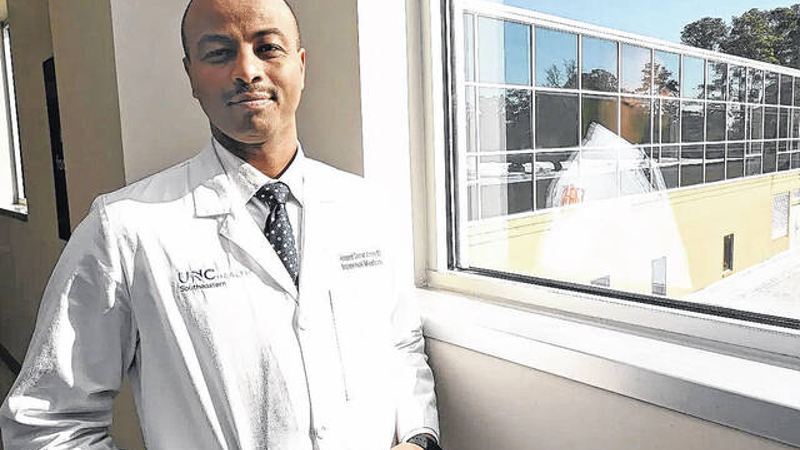
Dr. Ahmed Ahmed, a third-year internal medicine resident at UNC Health Southeastern in Lumberton, North Carolina, is part of a broader initiative to address rural physician shortages. Robeson County is one of the poorest and least healthy counties in North Carolina, with disproportionate rates of diabetes and heart failure and insufficient doctors to serve the population.
Ahmed attended medical school in Shenyang, China, and has lived all over the world, but chose to pursue rural medicine after witnessing how poor access to health care affected his younger sister’s Type 1 diabetes management during his childhood in rural eastern Africa. As a rural physician, he noted that “you definitely have to step up and try to cover some of the gaps, because you can’t just tell the patient, ‘All right, go down the street and see a nutritionist.’ You have to do some of that work yourself.”
North Carolina has only 10 rural residency and fellowship programs among its 402 total accredited programs—less than in some states with similar rural populations. Pennsylvania and Ohio each have 21 rural programs to serve 3 million and 2.8 million people, respectively. The state’s five-year Rural Health Transformation Plan calls for nearly doubling the number of programs by adding eight to 12 rural residency and fellowship programs by 2031, which could add 165 physicians to rural areas.
North Carolina received $213 million from the federal Rural Health Transformation Program in the first year, the 10th largest amount in the nation. Creating a new residency program can cost up to $1 million, which is often out of reach for rural hospitals more likely to have negative operating margins. Nearly 100% of the state’s rural residency positions are filled every year, indicating strong interest despite the limited number of slots—only 165 of the state’s 3,700 current residency positions, or about 4%, are in rural areas. Ahmed has already accepted a position as a hospitalist at UNC Health Southeastern after completing his residency.
This article is an AI-assisted summary. All facts and figures are drawn from the original report: https://www.robesonian.com/news/337747/healing-rural-nc-one-doctor-at-a-time