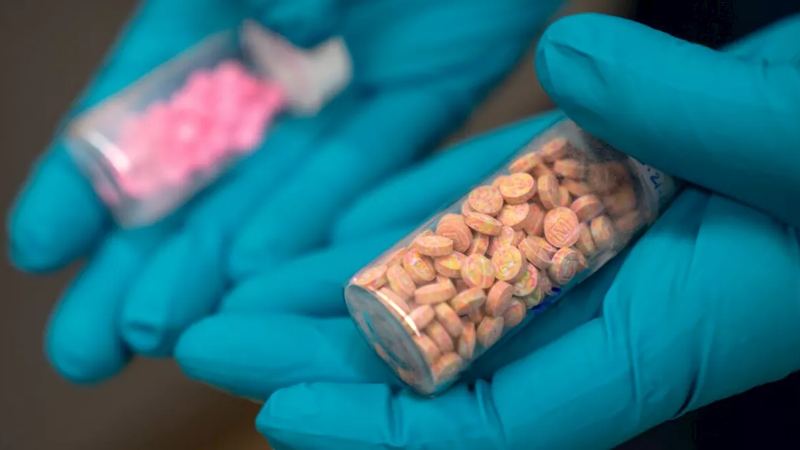
While fentanyl-related deaths are declining in the U.S., public health experts warn that a rapidly evolving mix of synthetic drugs—described as a “synthetic soup”—poses new threats to overdose prevention and treatment. Recent cases reveal the challenge: Naida Rutherford, a coroner in Richland County, South Carolina, investigated an apparent overdose where a victim showed physical overdose symptoms but tested negative for all substances. Expanded testing revealed cychlorphine, an incredibly potent synthetic opioid spreading rapidly in the U.S. street supply. “This is the first time we’ve seen it in South Carolina, which is very scary because none of us knew to test for it,” Rutherford told NPR.
The street drug supply now contains a rapidly changing mix of substances that includes novel synthetic opioids like nitazenes, powerful sedatives like medetomidine and xylazine (tranq), and various other compounds. Researchers encounter new chemical substances approximately once a month or every other month. Nabarun Dasgupta, a researcher at the University of North Carolina studying street drugs and overdose patterns, noted that these new synthetics are often more potent than fentanyl, and the composition and amount of substances in the supply constantly change, making it impossible for experienced drug users to protect themselves from toxic batches.
Complicating Medical Response
These unpredictable drug cocktails are often resistant to standard overdose treatments like Narcan and naloxone. Medetomidine presents a particular challenge: withdrawal is life-threatening if someone stops cold-turkey, often requiring extensive and costly hospital care. Despite these dangers, the U.S. is experiencing a historic, sustained decline in fatal overdose deaths. Deaths are down dramatically from the 12-month peak of nearly 113,000 drug deaths recorded in August 2023. Researchers credit a mix of factors including better health and addiction care interventions. Opioid-related deaths have fallen so rapidly that stimulants like cocaine and methamphetamines now kill more people than opioids for the first time in decades. Maine recorded a particularly hopeful development: no residents under age 25 died from overdoses in nearly 12 months. Dasgupta suggested that the shift toward heavily adulterated street drugs with undesirable effects may actually be contributing to fewer overdose deaths, as long-time users are increasingly opting out of risky drug use.
This article is an AI-assisted summary. All facts and figures are drawn from the original report: https://us.headtopics.com/news/fentanyl-deaths-decline-but-new-synthetic-soup-threatens-82229104