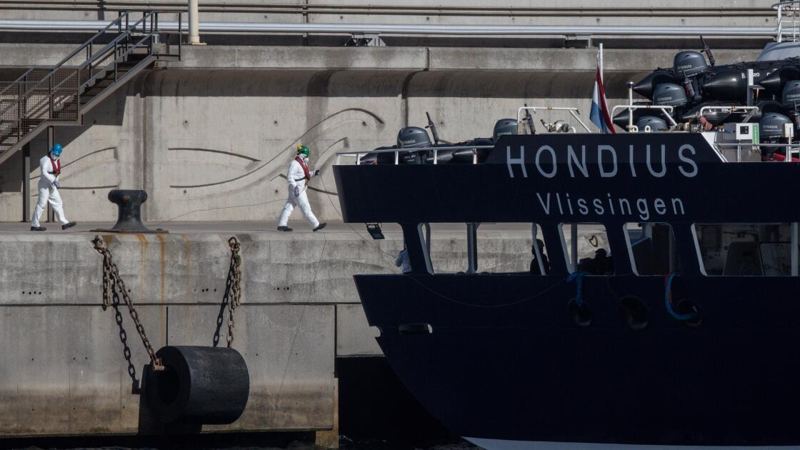
Four California residents were exposed to the Andes virus, a strain of hantavirus, after a cruise ship outbreak killed three passengers, health officials announced. The individuals—three cruise ship passengers and one Sacramento resident who shared a flight with an infected person in South Africa—have shown no symptoms and remain under monitoring.
The outbreak occurred aboard the MV Hondius, which carried 147 people: 86 passengers and 61 crew members. The virus killed three people and confirmed nine total cases, with seven laboratory-confirmed and two probable. One patient tested mildly positive for hantavirus and remained in biocontainment at the University of Nebraska Medical Center, which houses the nation’s only federally funded National Quarantine Unit for high-consequence infectious diseases.
Experts stressed that hantavirus presents different transmission risks than COVID-19. The virus infects cells deep in the lungs, making it far less easily transmitted than respiratory viruses spread by coughing or breathing. According to the Centers for Disease Control and Prevention, 38% of people who develop respiratory symptoms from hantavirus may die from the disease. In the U.S., between 1993 and 2023, there were 890 laboratory-confirmed cases. Hantavirus is transmitted via the urine, feces, and saliva of wild rodents, though the Andes strain can spread between infected humans through close, prolonged contact.
Dr. Nicole Iovine, chief medical epidemiologist at the University of Florida Shands Hospital, noted that person-to-person transmission requires close contact and that the average American’s risk is low unless they spend prolonged time near an infected individual. Experts said concerns are reasonable given the virus’s severity but emphasized this situation is unlikely to become a pandemic.
This article is an AI-assisted summary. All facts and figures are drawn from the original report: https://newspub.live/science/hantavirus-fears-heighten-with-4-californians-exposed-to-the-disease-is-the-alarm-warranted/