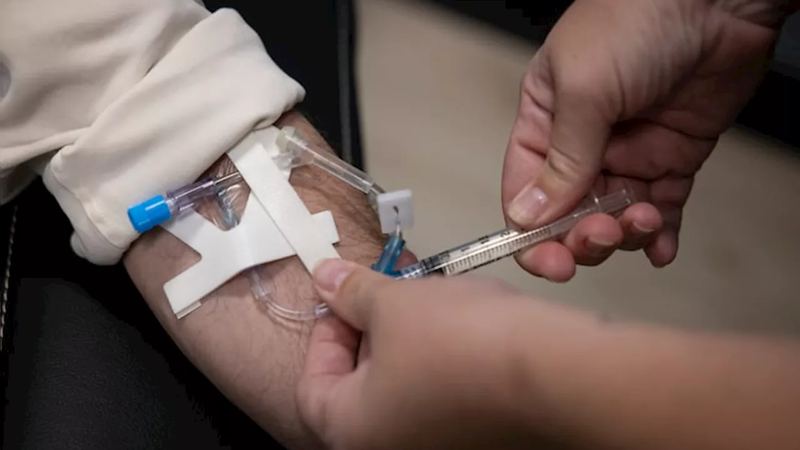
A new study presented at the American Psychiatric Association’s annual meeting found that a combination of drugs—a single ketamine infusion followed by low-dose buprenorphine—significantly sustained reductions in suicidal ideation in adults with major depressive disorder. The randomized, double-blind, placebo-controlled trial involved 50 patients with major depression and active suicidal behavior who all received one IV infusion of ketamine and two days later were randomized to receive either an ultra low dose of buprenorphine or placebo for four weeks, with weekly assessments.
Ned Kalin, editor-in-chief of the journal that will publish the paper and chair of the Department of Psychiatry at the University of Wisconsin School of Medicine and Public Health, called it “really a breakthrough study that provides hope and immediate clinical applications.” However, other experts urged taking a wait-and-see approach. Bertha Madras, a professor of psychobiology at Harvard Medical School, noted that “with all these promising treatments, short-term things always look very beneficial, and it’s only after a period of time when you have use for a larger population for a longer time that you see the adverse consequences.”
The idea for the treatment grew out of earlier research suggesting a close relationship between physical pain, psychological pain, and suicidality. Study authors Alan F. Schatzberg and Jason M. Tucciarone, both from Stanford University School of Medicine, pointed to a 2016 Israeli study that helped inspire the approach. Tucciarone noted that both the placebo group and the ketamine plus buprenorphine group experienced reductions in depressive symptoms, something researchers expected given prior evidence that ketamine can rapidly alleviate depression, but there was no statistically significant difference between the two groups on depression itself.
After treatment ended, researchers observed some rebound in both depressive symptoms and suicidal thoughts, though patients still remained improved compared with before treatment began. Researchers also did not observe signs of withdrawal symptoms. Tucciarone concluded: “We really think that these findings offer a scalable and safe therapeutic option for folks at risk of suicide.”
This article is an AI-assisted summary. All facts and figures are drawn from the original report: https://us.headtopics.com/news/surprising-drug-combo-could-reshape-suicide-treatment-83593639